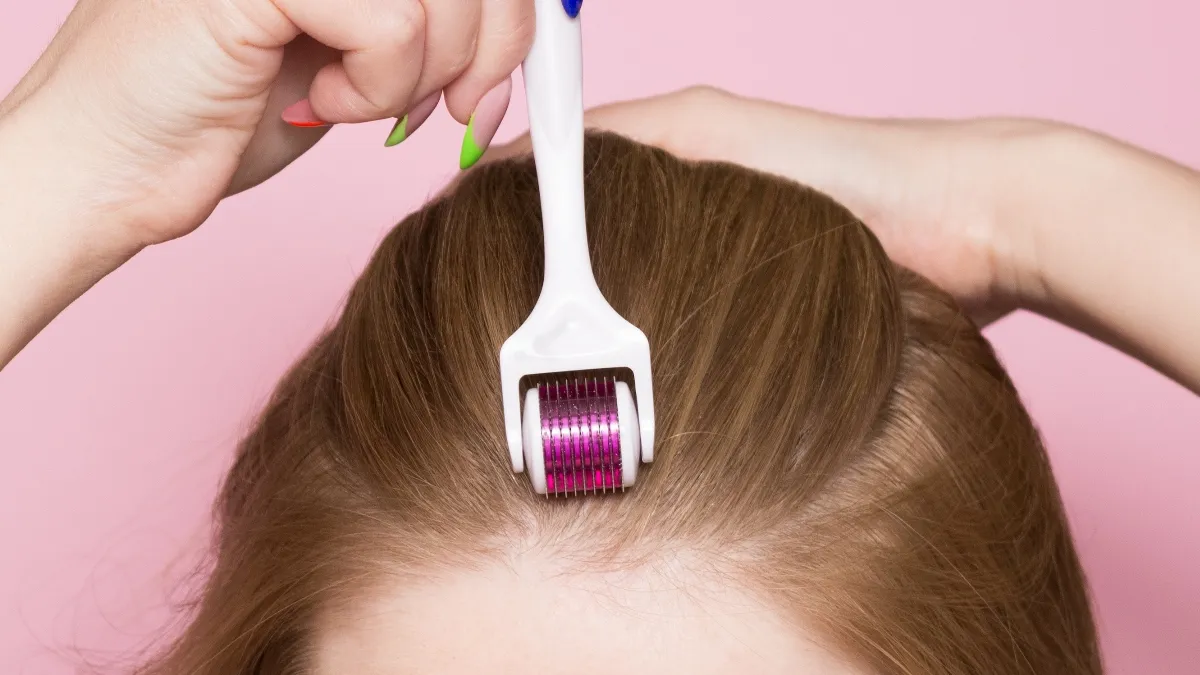
Dermarollers have become a popular at-home solution for hair loss, promoted widely on social media as a quick and affordable way to stimulate hair regrowth. While microneedling can have benefits when done correctly, using a dermaroller at home is not always safe or advisable. In many cases, improper use can do more harm than good.
This article explains why dermarollers should not be used at home without proper medical guidance.
1. High Risk of Infection
Dermarollers work by creating tiny punctures in the scalp. These micro-wounds open the skin’s protective barrier, making it vulnerable to:
At home, sterilization is often inadequate. Reusing rollers, improper cleaning, or touching the scalp with unclean hands can introduce harmful microbes, leading to painful infections and long-term scalp damage.
2. Incorrect Needle Length Can Damage the Scalp
Many people unknowingly use needle lengths that are too long for home use.
-
Deep needles can cause excessive bleeding
-
Repeated injury may damage hair follicles
-
Improper depth can lead to scarring
Professionals select needle size based on scalp thickness, hair loss pattern, and medical history—something most home users cannot accurately assess.
3. Risk of Permanent Scarring and Fibrosis
Aggressive or frequent dermarolling can trigger chronic inflammation. Over time, this may lead to:
-
Micro-scarring of the scalp
-
Fibrosis (thickened, hardened skin tissue)
-
Reduced blood flow to hair follicles
Scarred scalp tissue prevents new hair growth, making hair loss irreversible.
4. Can Worsen Existing Scalp Conditions
Dermarolling should never be done on a scalp affected by:
-
Psoriasis
-
Eczema
-
Severe dandruff
-
Fungal infections
-
Acne or open wounds
Rolling over these conditions can spread infection and inflammation across the scalp, worsening symptoms and delaying healing.
5. Lack of Proper Diagnosis
Not all hair loss is the same. At home, many people:
-
Misdiagnose the cause of hair loss
-
Use dermarollers for conditions it cannot treat
-
Ignore underlying medical or hormonal issues
Dermarolling is ineffective for advanced baldness or scarring alopecia, and using it in such cases only wastes time and risks scalp damage.
6. Overuse Due to Impatience
Hair regrowth is slow, but many users overdo dermarolling in hopes of faster results. This can cause:
-
Severe scalp irritation
-
Increased hair shedding
-
Delayed healing
Without professional supervision, overuse is one of the most common causes of adverse effects.
7. Unsafe for Certain Individuals
At-home dermarolling is not safe for people who:
-
Have diabetes or poor wound healing
-
Are prone to keloid scars
-
Have immune system disorders
-
Take blood-thinning medications
These medical risks are often overlooked in DIY treatments.
8. Delays Proven Hair Loss Treatments
Relying solely on dermarolling can delay effective, evidence-based treatments such as:
Delaying treatment may result in permanent follicle loss that cannot be reversed later.
Professional Microneedling vs Home Dermaroller
Professional microneedling is:
-
Performed under sterile conditions
-
Customized to individual scalp needs
-
Monitored for safety and results
At-home dermarolling lacks these safeguards, increasing risk without guaranteed benefit.
Final Thoughts
While dermarollers are widely marketed as safe for home use, they are not suitable for everyone. Improper technique, poor hygiene, and lack of medical guidance can lead to infection, scarring, and worsening hair loss.
Hair regrowth should always prioritize scalp health over quick fixes.
Key Takeaway
Dermarollers should only be used under professional guidance or with thorough medical understanding. When it comes to hair loss, safe and personalized treatment is far more effective than DIY experimentation.
.jpeg)